Business sale negotiation strategies for SME owners
Selling a business involves far more than agreeing a sale price. From purchase price and deal terms to earnouts and payment structures, every stage shapes the final outcome.
Whether you’re preparing to exit a business for the first time or have experience selling companies, understanding how to negotiate a business sale helps you protect value and reduce unnecessary risk.
Our guide explores the key areas business owners should consider when negotiating the sale of a business, along with practical tips for approaching discussions with confidence.
Business Sale Negotiation at a Glance
A successful negotiation is about more than securing the highest offer. Here’s what can make the difference when assessing a potential deal before we explore each area in more detail.
Key points:
- Look beyond the sale price: The strongest offer isn’t always the one with the highest headline figure. Payment structure, deal terms and risk can all affect the true value of a deal.
- Know your position: Understand your business valuation and decide your minimum acceptable price, preferred payment structure and other priorities before negotiations begin.
- Prepare early: Accurate financial records and supporting documentation can strengthen your negotiating position and help reduce delays during due diligence.
- Consider the full deal: Purchase price, payment timings, earnouts, warranties, handover arrangements and seller financing can all influence what you ultimately receive and the risk you retain.
- Get the right support: An experienced business sales adviser can help assess offers objectively, manage buyer communication and negotiate terms with greater confidence.
Bottom line: Successful business sale negotiation is about balancing value, certainty and risk. Going into discussions prepared, with clear priorities and an understanding of the wider deal terms, puts you in a stronger negotiating position.
Why negotiation matters when selling a business
Business sale negotiation plays an important role in protecting value and improving the certainty of a deal. While securing a good price is important, successful negotiations are rarely just about the headline figure.
Factors such as payment structures, earnouts, warranties, and completion timelines should all be considered during negotiations. In some situations, a slightly lower offer with stronger terms may be more beneficial than pursuing the highest headline price.
Set clear priorities from the outset and consider what matters to the buyer. This gives you a practical basis for comparing offers and negotiating a deal that supports your financial and personal exit goals.
Preparing before negotiating a business sale
Strong negotiations start long before any discussions with a buyer. Thorough preparation clarifies your position, supports confident offer assessment, and reduces the risk of making decisions under pressure.
Understanding your business valuation
A realistic valuation provides a useful starting point for negotiating the sale of a business. Understanding what drives the value of your business helps set realistic expectations and strengthens your position when negotiating the purchase price.
A professional valuation provides a useful benchmark for assessing offers. It also highlights areas that may strengthen value before the business goes to market.
See our guide on business valuation methods to learn what factors influence a company’s value and how valuations are typically calculated.
Defining your minimum acceptable terms
Before entering negotiations, define your priorities and minimum acceptable terms. For example, this could include:
- A minimum sale price
- Preferred payment structure
- Completion timeframe
- Future involvement in the business
Clear priorities simplify decisions as negotiations progress and help you judge each offer against your preferred outcome.
Preparing financial documentation
Buyers will typically want a clear picture of the business’s financial performance before progressing with a deal. Having accurate financial records, management information, and supporting documentation builds buyer confidence and strengthen your negotiating position.
Strong financial information minimises due diligence delays and provides evidence to support your valuation, making it easier to justify the asking price and answer buyer questions.
Preparing for due diligence early helps avoid unnecessary delays later in the process. Our guide to due diligence for buying and selling a business explains what to expect and how to prepare.
Key areas to negotiate during the sale process
Every business sale is different, but there are several areas that commonly need to be discussed before a deal can move forward. These areas shape the transaction’s final value, timing, and certainty, as well as the level of risk for the seller.
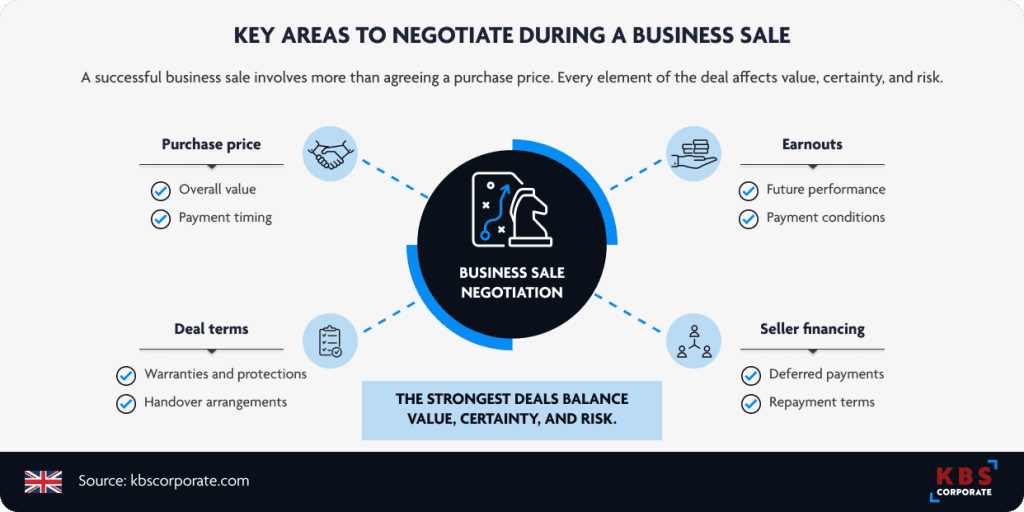
Figure 1: Key areas to consider when negotiating a business sale, from purchase price and deal terms to earnouts and seller financing.
Negotiating purchase price
The purchase price is usually one of the first things business owners focus on, but it should be considered alongside the wider terms of the deal.
A buyer may make an offer based on profitability, growth potential, customer relationships, market position, and perceived risk. Understanding how buyers assess value helps business owners respond to offers confidently and defend their position during negotiations.
It is also important to consider how and when the purchase price will be paid. A higher offer may not always be the strongest option if a large proportion is deferred, conditional, or linked to future performance.
Negotiating deal terms
Negotiating deal terms is just as important as agreeing the sale price. The deal structure influences how much value the seller ultimately receives and how smoothly the transaction progresses.
Deal terms may include payment timings, handover arrangements, warranties, indemnities, restrictions, and the seller’s involvement after completion. These details have a major impact on the seller’s position, particularly where part of the consideration is deferred or dependent on future outcomes.
Clear terms reduce uncertainty and avoid misunderstandings later in the process.
Negotiating earnouts
Earnouts are often used when part of the sale price is linked to the future performance of the business. This can help bridge the gap between what a buyer is willing to pay upfront and what the seller believes the business could be worth.
When negotiating earnouts, it is important to understand how performance will be measured, how long the earnout period will last, and what level of control the seller will have after completion.
Earnouts offer the potential for greater value, but they also create uncertainty. Sellers should make sure the terms are clear, realistic, and aligned with how the business is expected to perform.
Seller financing negotiation
Seller financing may be used in situations where the seller agrees to receive part of the purchase price over time, rather than receiving the full amount upon completion of the sale.
This arrangement may allow a deal to proceed when the buyer cannot fund the entire transaction upfront. However, the seller remains exposed to repayment risk after completion.
When negotiating seller financing, business owners should consider payment timings, interest, default provisions, and how comfortable they are with the buyer’s ability to make future payments.
Selling a business without professional support makes these risks harder to identify and manage. A business sales adviser helps assess the buyer’s proposal, negotiate appropriate protections, and ensure the arrangement is documented clearly.
Common mistakes business owners make during negotiations
One common mistake is focusing only on the headline sale price. The overall deal structure determines when and how much the seller receives, as well as the level of risk they retain after completion.
Some business owners enter negotiations without clear priorities, making offers harder to assess and compare. Without adequate preparation, owners are more likely to react emotionally or accept terms that conflict with their long-term goals.
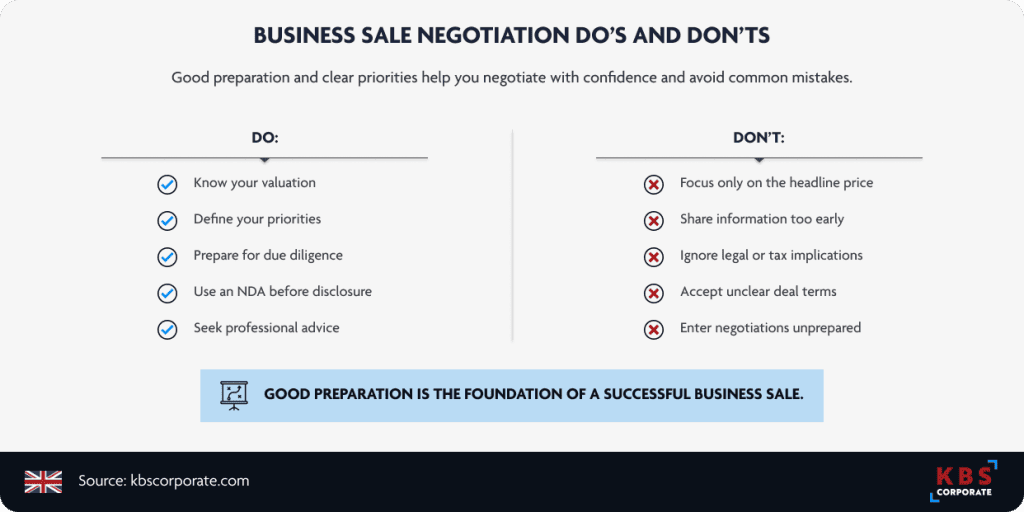
Figure 2: Key do’s and don’ts to help you prepare for business sale negotiations and avoid common mistakes.
Other common mistakes include:
- Sharing too much information too early
- Failing to prepare for due diligence
- Overlooking tax or legal implications
- Not seeking professional guidance at the right stage
In many cases, avoidable mistakes occur simply because business owners underestimate how much preparation is involved in a successful sale. A structured approach keeps owners focused, supports effective offer comparison, and reduces unnecessary risk during the sale process.
Many of these issues can be avoided with the right preparation before going to market. Read our guide to common mistakes when preparing to sell a business to learn more about the challenges business owners often face during the sale process.
How professional advisers improve business sale negotiations
Professional advisers provide valuable support throughout the business sale negotiation process. They help business owners understand buyer expectations, assess offers objectively, prepare for due diligence, and negotiate terms with greater confidence.
An adviser provides an independent perspective during what can often be an emotional process. Selling a business is a major decision, and having experienced support can help owners stay focused on both the commercial details and their wider exit goals. You can learn more in our complete guide to business exit strategy.
For many business owners, professional guidance also creates competitive tension, manages buyer communication, and reduces the risk of delays or misunderstandings.
Final thoughts on negotiating the sale of a business
Negotiating the sale of a business is about more than just achieving the highest possible price. Factors that can influence the outcome include:
- Payment structures
- Deal terms
- Earnouts
- Seller financing
By preparing early, understanding the value of the business, and approaching negotiations with clear priorities, business owners can put themselves in a stronger position to secure the best deal.
If you’re considering selling your business, KBS Corporate can support you throughout the sale process, from valuation and buyer identification through to negotiations and completion. Find out more about selling your business with the UK’s number one business sales adviser.

Ready to speak to our business sales experts?
Arrange a confidential discussion with a business sales adviser today.
SPEAK TO US Ï
Ï
 Ï
Ï
 Ï
Ï