TUPE and employment law when selling a business
If like most businesses, yours has employees, then employment law can become one of the most important parts of the sale process.
Depending on how the deal is structured, TUPE regulations may protect employees and place legal obligations on both the buyer and seller.
In this guide, we explain what TUPE means, when it applies, and how understanding your obligations early can help ensure your employees remain protected through the transition, while you reduce delays and avoid unnecessary disputes.
TUPE at a Glance
TUPE, which is short for the Transfer of Undertakings (Protection of Employment) regulations, can be one of the most important employment law considerations when selling a business, but whether it applies depends entirely on how the deal is structured.
Key points:
- What is TUPE? The Transfer of Undertakings (Protection of Employment) Regulations 2006 protect employees when a business changes ownership, preserving their existing terms, conditions, and length of service.
- Does it apply to your sale? TUPE usually applies to an asset sale but not a share sale, where the legal employer stays the same.
- What happens to employees? Where TUPE applies, employees transfer automatically on their existing contracts, keeping their salary, benefits, holiday entitlement, and protection from unfair dismissal.
- What must sellers do? Sellers must provide Employee Liability Information (ELI) at least 28 days before transfer and inform, and in some cases consult, affected employees before completion.
- What if sellers don’t comply? Failing to provide ELI can cost at least £500 per employee; failing on consultation can result in up to 13 weeks’ uncapped gross pay per employee, with liability falling on the seller, buyer, or both.
- Can employees be dismissed or their roles changed? Dismissals connected to the transfer are likely to be unfair. Role changes that are detrimental and transfer-related are also generally invalid, unless there’s a genuine economic, technical, or organisational (ETO) reason.
Bottom line: Getting your employment records in order and understanding your TUPE obligations before going to market can prevent delays, reduce risk, and give buyers greater confidence in the deal.
What is TUPE?
TUPE, short for Transfer of Undertakings (Protection of Employment) Regulations 2006, is a set of UK employment regulations designed to protect employees when the business they work for changes ownership.
Where TUPE applies, employees are generally entitled to:
- Transfer to the new employer on their existing terms and conditions
- Have their length of service preserved
- Retain their existing contractual rights
For business owners, TUPE can place responsibilities on both the buyer and seller. These typically include:
- Providing the buyer with accurate employee liability information
- Informing and, where required, consulting with employees or their representatives
- Ensuring employees’ existing rights are protected through the transfer
That said, TUPE doesn’t apply to every business sale. Whether the regulations apply depends on how the transaction is structured, making it important to understand the nuances before moving forward.
Does TUPE apply when selling a business?
Whether TUPE applies ultimately depends on how the business is being sold. In most cases, the key distinction is whether the transaction is an asset sale or a share sale.
Asset sale vs share sale
The type of transaction determines whether TUPE applies and what obligations transfer to the buyer once the sale is complete.
What is an asset sale?
An asset sale involves the buyer purchasing either some or all of the business’s assets rather than the company itself. Assets may include:
- Equipment
- Contracts
- Intellectual property
Where the business or part of it transfers to a new employer, TUPE will often apply. This means eligible employees usually transfer to the buyer on their existing terms and conditions, with continuity of employment preserved.
What is a share sale?
In a share sale, the buyer acquires the shares in the company rather than its individual assets. Although ownership of the company changes, the legal employer remains the same.
Because the employer doesn’t change, TUPE doesn’t usually apply to a share sale. However, employment matters will still form an important part of the buyer’s review. Prospective buyers will want to understand your workforce, employment contracts, and any potential liabilities before completing the acquisition.
| Asset sale | Share sale |
| Buyer purchases business assets | Buyer purchases shares in the company |
| TUPE often applies | TUPE doesn’t usually apply |
| Employees may transfer to the buyer | Employees remain employed by the same company |
| Employment obligations transfer to the new employer | Employment relationships generally remain unchanged |
The right structure for your sale will depend on your circumstances. Find out more about your company sale options, or see our guide to selling a limited company for more detail on these transaction structures.
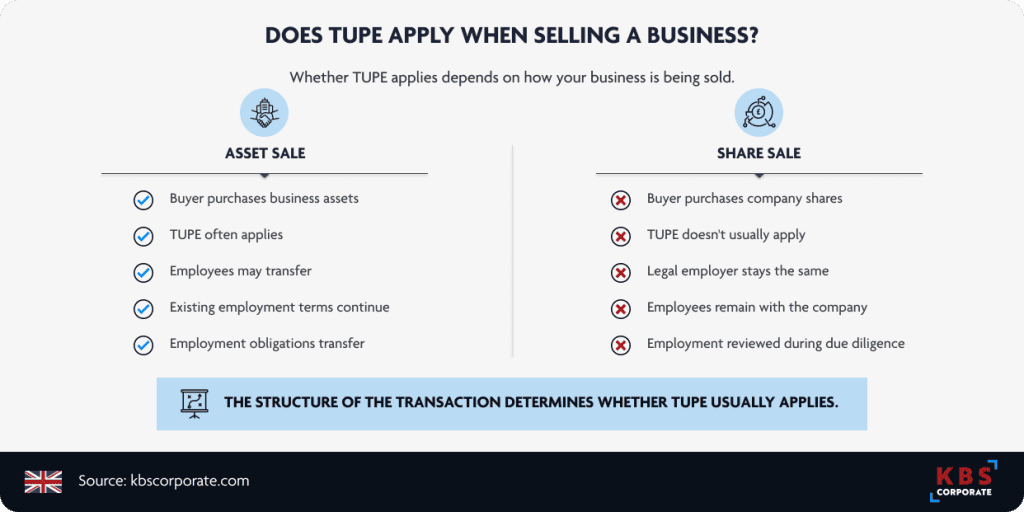
Figure 1: The structure of the transaction determines whether TUPE usually applies. In most asset sales, employees transfer to the buyer on their existing terms. In a share sale, the legal employer remains unchanged.
What happens to employees under TUPE?
Employees will usually transfer to the new employer automatically where TUPE applies. In most cases, they continue their employment on their existing terms and conditions, helping preserve their existing employment rights.
Generally, employees will keep:
- Their continuity of employment, including their length of service
- Their salary, contractual benefits, and working hours
- Their holiday entitlement
- Protection against unfair dismissal connected solely to the transfer
However, just because employees transfer to the new employer, this doesn’t necessarily mean every aspect of their employment can never change. Any changes to employment contracts must comply with employment law and can’t usually be made simply because the business has been sold.
For business owners preparing for a sale, keeping employment records accurate and up to date can help the transaction progress more smoothly. Buyers will expect clear and accurate employment records as part of their review, making it worthwhile to organise this information before approaching potential buyers.
What are the seller’s responsibilities when TUPE applies?
When a business transfer falls under TUPE, sellers have certain legal responsibilities before the sale completes. The first step is to identify which employees fall within scope, as not every employee automatically transfers, and determining who is assigned to the part of the business being sold is an important early task.
Getting these obligations right matters, not just for compliance, but because buyers will scrutinise employment matters closely during due diligence.
Providing Employee Liability Information (ELI)
One of the seller’s primary obligations is to provide the buyer with Employee Liability Information (ELI).This must be provided at least 28 days before the transfer completes, and must include:
- The identity and age of employees who will transfer
- Details of their employment contracts, including terms and conditions
- Any disciplinary action taken in the previous two years
- Any employee grievances raised in the previous two years
- Any legal proceedings brought by employees in the previous two years
- Any collective agreements currently in place
If the information changes before the transfer completes, you’re also required to notify the buyer, as the obligation doesn’t end once ELI has been provided.
If you fail to provide ELI, or provide it late or inaccurately, the buyer could make a tribunal claim against you. This could award compensation of at least £500 per employee where the obligation hasn’t been upheld.
Informing and consulting employees
Sellers are also required to inform affected employees, or their elected representatives, about the proposed transfer before it takes place. This means telling them:
- That the transfer is happening and when
- The legal, economic, and social implications for them
- Any measures the seller or buyer intends to take in relation to the transferring employees
Where either party intends to take measures that will affect employees, such as changes to roles or working arrangements, consultation must take place. You can’t just notify them.
There’s no fixed minimum consultation period under TUPE, but it needs to happen long enough before the transfer to allow meaningful discussion.
Failure to comply with information and consultation obligations can be costly. An employment tribunal can award up to 13 weeks’ uncapped gross pay per affected employee, and liability can fall on the seller, the buyer, or both.
What happens if a seller doesn’t meet their obligations?
If a seller fails to comply with their TUPE obligations, the consequences don’t simply disappear at completion. Liability can transfer to the buyer, which is another reason why buyers carry out detailed employment due diligence.
It’s also worth reviewing the sale agreement carefully for TUPE warranties and indemnities, particularly around consultation failures and employee liabilities.
Having everything organised and seeking employment law advice before approaching buyers can help avoid issues surfacing at a critical stage of the transaction.

Figure 2: Getting your employment records and obligations in order before approaching buyers can help avoid delays and support a smoother sale process.
Can employees be dismissed because of TUPE during a sale?
TUPE is designed to protect employees when a business changes ownership, meaning employees can’t usually be dismissed due to the transfer itself.
For company owners, the key point is that employment issues should be considered early in the sale process. Identifying potential workforce challenges before going to market can help avoid delays and reduce the risk of employment issues disrupting the transaction.
Can employees be made redundant during TUPE?
Redundancies or changes to the workforce are still possible, especially where there is a genuine economic, technical, or organisational (ETO) reason, provided the correct legal process is followed.
Can employees be dismissed during a TUPE transfer?
Dismissals during a TUPE transfer are likely to be classed as unfair, regardless of how long an employee has worked for the business. TUPE is specifically designed to prevent employers from using a transfer as a reason to remove staff.
That said, a dismissal could be lawful if there’s a genuine ETO reason. For example, a legitimate business restructure that would have happened regardless of the transfer would be valid, provided the correct process is followed. Taking employment law advice early is advisable, as it can help avoid costly mistakes.
Can roles change after a TUPE transfer?
Since the terms and conditions employees hold at the point of transfer are generally protected, a new employer can’t usually change job duties, responsibilities, or working arrangements just because ownership has changed. Any changes to employment contracts that are connected to the transfer and detrimental to employees are likely to be invalid.
It’s a good idea for employers to carry out careful workforce planning before a deal completes, rather than assuming they can reshape roles once the transaction is done.
Can promotions occur during a TUPE transfer?
TUPE protects existing terms and conditions, but it doesn’t freeze an individual’s career. Employees who transfer can still be considered for promotion, take on broader responsibilities, or step into new roles that emerge from the combined business.
Opportunities that didn’t exist before can open up when a transfer creates a larger organisation, meaning employees should take into account that a change of ownership doesn’t necessarily mean standing still.
Avoiding common TUPE mistakes when selling a business
While TUPE doesn’t apply to every sale, failing to prepare employment information can create unnecessary delays during a transaction. Anyone considering an acquisition will typically review employment contracts, HR records, holiday entitlement, disciplinary matters, and any ongoing employment disputes as part of due diligence.
Identifying potential issues early gives you time to address them before going to market, helping avoid unnecessary hold-ups later in the sale. The same principle applies across other areas of the business. In our experience, businesses that address financial records and reduce founder dependency before going to market tend to have smoother, faster transactions.
If you’re preparing for a sale, our guide to common mistakes when preparing to sell a business shares helpful insights into avoiding common pitfalls.
Why employment matters to prospective buyers
Clear and well-maintained employment records can make a positive impression on prospective buyers. As part of due diligence, acquirers will want to understand the people behind the business, as well as any employment-related risks they may be taking on. They will typically review:
- Employment contracts
- Staff records
- Holiday entitlement
- Pensions
- Disciplinary matters
- Any ongoing employment disputes
Having this information organised demonstrates that the business has been well managed. It can also reduce follow-up questions, keep the sale moving, and make it easier for buyers to complete their assessment.
If you’re preparing to sell, understanding the wider due diligence process can help you anticipate what buyers are likely to request before entering negotiations.
Planning to sell your business?
Employment law is just one part of preparing a business for sale. Taking the time to organise employment records and understand your TUPE obligations can help your sale progress more smoothly and reduce avoidable delays.
If you’re planning on selling your business, KBS Corporate can help you prepare for sale, manage the transaction, and achieve a successful exit.
TUPE & employment law FAQs
No, TUPE doesn’t apply to a share sale because the legal employer remains the same. Although ownership of the company changes, employees continue working for the same legal entity. Employment matters will still be reviewed carefully before the sale completes.
TUPE will often apply where a business, or part of a business, transfers to a new employer through an asset sale. Eligible employees usually transfer with the business on their existing terms and conditions, although every transaction should be considered on its own circumstances.
Employees can object to transferring under TUPE, but the consequences will depend on the circumstances. In many cases, objecting means their employment ends when the transfer takes place, without the right to redundancy pay.
It’s a good idea for both buyers and sellers to seek professional advice where an employee objects to the transfer.
Sellers are generally required to provide Employee Liability Information (ELI) before the transfer. This typically includes details of employees’ contracts, disciplinary or grievance records, any legal claims, and other relevant employment information needed by the buyer.
The date of the redundancy and the circumstances surrounding the business transfer affect who is responsible. Where redundancies take place after completion, the new owner is often liable. That said, each transaction is different, so seeking professional guidance is advised.
Employment contracts don’t automatically change in light of the sale, as employees usually transfer on their existing terms and conditions. Any proposed changes must comply with employment law and can’t normally be made solely because of the transfer.

Ready to speak to our business sales experts?
Arrange a confidential discussion with a business sales adviser today.
SPEAK TO US Ï
Ï
 Ï
Ï
 Ï
Ï